
Lisard Cuevas, 02/05/2022
A daruma doll is a traditional Japanese good luck charm for making a wish or setting a goal.
It is typically round, made with paper-mache, and painted by a skilled artisan for the face, body, and other aesthetics.
The eyes remain intentionally unpainted for the owner to begin the process of using the daruma:
-
Have a goal, wish, or promise to fulfill.
-
Paint one eye with a circular dot (either eye is fine, but the daruma’s left eye is suggested).
-
Work towards the goal every day.
-
Once the goal or wish becomes reality, paint in the other eye.
Daruma dolls are ubiquitous in Japanese culture and often found on the shelves or altars in homes, businesses, restaurants, and temples, because auspicious charms are an ingrained part of Japanese fashion and lifestyle.
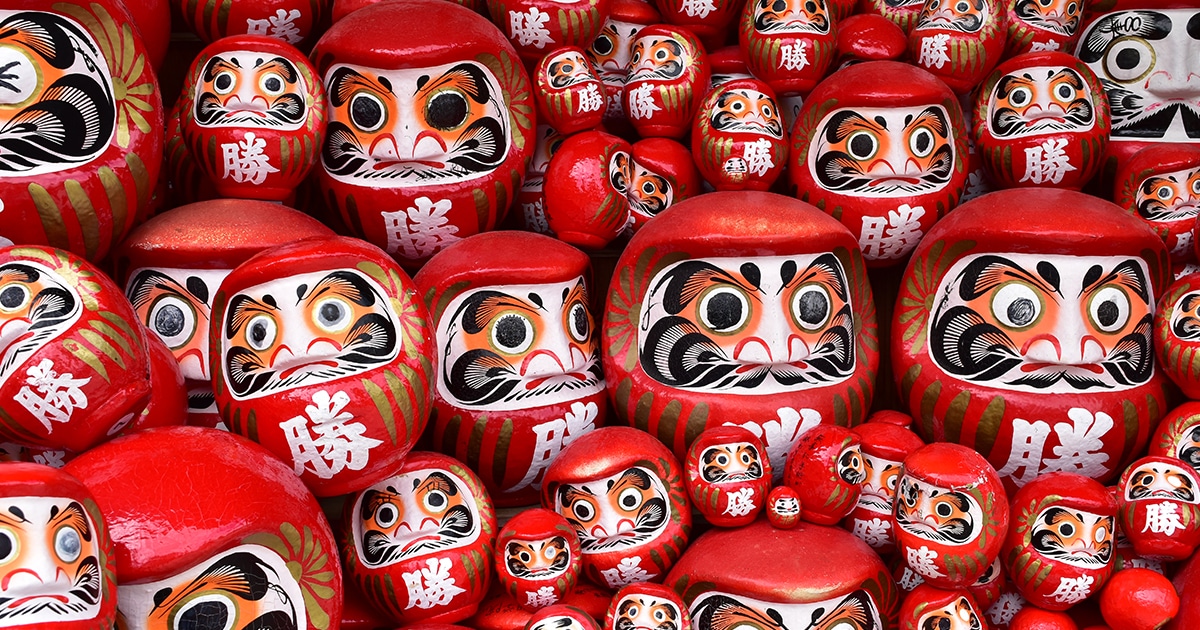
Daruma doll design & symbols explained
Because daruma dolls represent perseverance, it’s important to have designs that symbolize longevity.
The eyebrows are styled to resemble cranes, and the mustache/beard is made to look like turtle shells. The crane represents 1,000 years and the turtle shell 10,000 years.
Although the daruma doll may look angry, fierce, or stoic, it is a face of grit as one works towards the goal. Nothing is easy, but also no challenge is impossible.
Both eyes are left blank for the user to fill in one eye after making a wish and the other after the goal is completed. The drawing of the eyes signifies giving life and soul to the daruma by "opening the daruma doll's mind's eye".
History of the daruma doll and its legend
The Man & The Myth
Daruma dolls are based on a sage monk named Bodhidharma who lived in the 5th-6th century.He was known to be highly dedicated to meditation and austerity, which helped grow his reputation.
Like many religious/spiritual figures in history, there is the historical person and their fanciful folklore that grows bigger with every generation.
One of these stories is that Bodhidharma spent 9 years facing a cave wall in deep meditation with his eyes wide open, never blinking. His perseverance for enlightenment was so committed that his arms, legs, and body atrophied and fell by the wayside. Yet his spirit remained undaunted.
Because of this parable, Bodhidharma grew in popularity through China, Korea, Southeast Asia, and finally to Japan.
He’s also credited for introducing Zen Buddhism to China, Shaolin Kungfu, Zazen meditation, and green tea. So that’s a decent resume.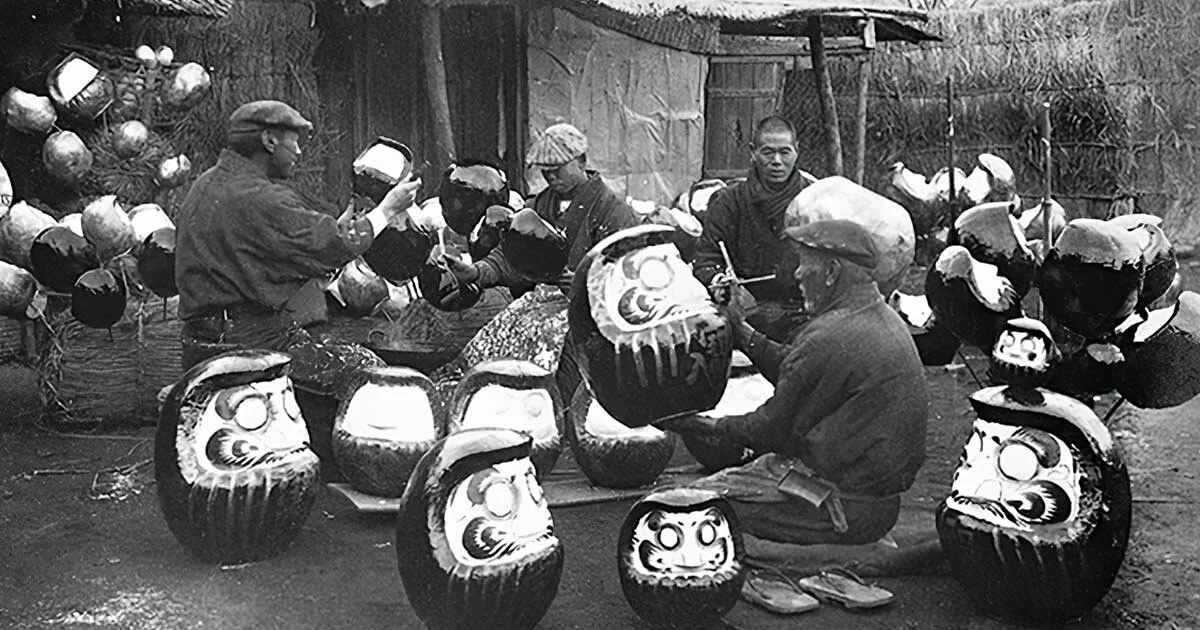
In Japanese History
In Japan, the first daruma dolls were charms made to protect children from smallpox and measles during the start of the Edo period (early 1600s). A vengeful demon was believed to be the cause of the infliction.
Fortunately, the smallpox devil was afraid of the color red; therefore red daruma dolls were displayed openly with the belief that red absorbs red. This spurred the magical and mythical abilities of daruma dolls.
Other theories suggest daruma dolls' red color represents fire, blood, and celebration because it’s an auspicious color in many Asian cultures.
Regardless of the red color origin story, daruma dolls evolved from protection against smallpox to protector of children to good childbirth to good harvest and now to good luck.
The daruma isn’t just a doll. It’s a physical manifestation of your goal, the hands of fate or faith, and everything in between. And it’s keeping you accountable.